
If you’re researching c-section scar camouflage, you’re probably one of the millions of mothers who delivered via cesarean and ended up with a horizontal scar across the lower abdomen that looks different — lighter, sometimes raised, sometimes with a small overhang of skin above it — than the surrounding tissue. C-section scars are among the most successfully treated scars in the entire paramedical specialty because they are typically consistent in length, predictable in their pigmentation pattern, and respond well to skin-tone pigment integration.
At Healing Skin Medical Aesthetics, c-section scar camouflage is performed by Dr. Cecilia Rusnak, our Master Trainer with three decades of clinical experience. This article walks through what c-section scar camouflage does, when in your post-partum healing timeline you should consider it, what realistic results look like, and how to decide if it’s right for your specific situation.
Important: Every scar heals differently. Outcomes described reflect typical results in appropriate candidates. Your specific case should be evaluated by Dr. Rusnak during a video consultation before any treatment plan is developed.
What C-Section Scar Camouflage Actually Does
C-section scar camouflage is a paramedical tattooing technique that deposits skin-tone pigment into the dermal layer of a fully healed cesarean section scar. The goal is visual integration — reducing the color contrast between the scar tissue and surrounding skin so the scar becomes significantly less visible in normal lighting and at conversation distance. The scar itself remains physically present; what changes is how visible it is.
Most of these scars present as hypopigmented (lighter than surrounding skin) once they’ve matured — typically appearing white, silver, or pale pink against darker abdominal tissue. Camouflage works exceptionally well on hypopigmented scars because we’re adding pigment back to tissue that lost its melanin during healing. Hyperpigmented scars (darker than surrounding skin) and hypertrophic scars (raised above the surface) require different approaches and may benefit from Inkless Scar Revision (ISR) first to remodel the tissue before camouflage.
When to Get C-Section Scar Camouflage After Delivery
The 12-Month Minimum Rule
Most reputable paramedical tattoo artists, including Dr. Rusnak, will not perform this treatment until at least 12 months after delivery — and not until you have completed breastfeeding. The 12-month minimum allows the scar to fully mature: redness fades, the scar settles into its long-term color, and the underlying tissue stops actively remodeling. Treatment before this window produces unpredictable color results because the scar itself is still changing.
Wait Until You’re Done Breastfeeding
Pigment work during breastfeeding is generally not recommended. While topical numbing agents and dermal pigments have not been shown to enter breast milk in meaningful quantities, the conservative clinical position is to wait until you have weaned. Hormonal shifts during breastfeeding can also affect skin pigmentation and healing in ways that complicate color matching. Most patients schedule camouflage 12 to 24 months post-delivery, after weaning.
If You’re Planning Future Pregnancies
Camouflage results are not affected by future pregnancies in most cases — the dermal pigment is below the layers of skin that stretch and recover during pregnancy. Some patients still prefer to wait until they’ve completed their family before pursuing camouflage to ensure their final result reflects their long-term body shape. This is a personal choice; clinically, treating between pregnancies is fine for most patients.
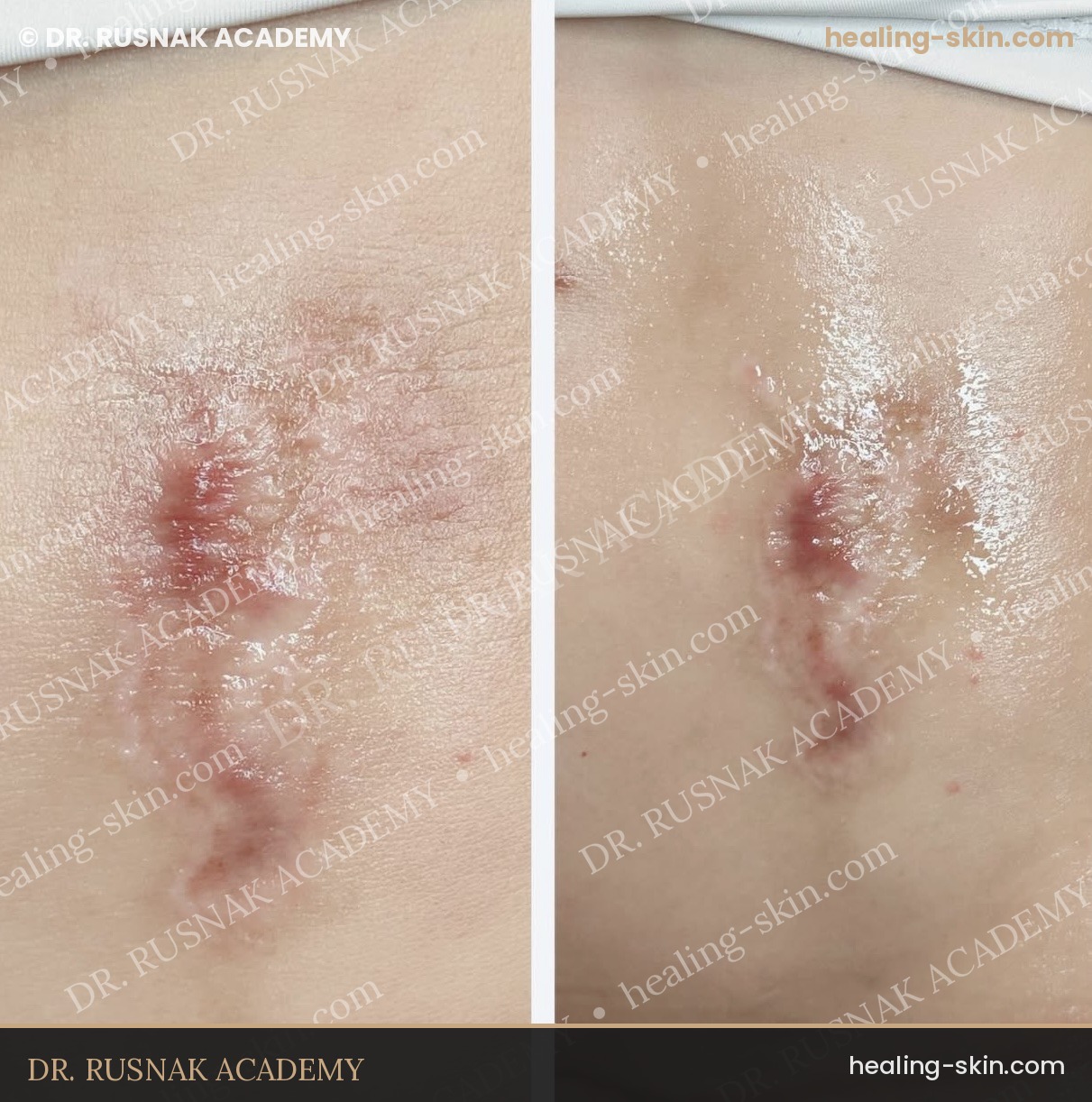
What Realistic C-Section Scar Camouflage Results Look Like
Patients evaluating this treatment deserve honest expectations. The realistic outcomes:
- Visual integration of 75 to 95 percent for mature hypopigmented scars across 2 to 3 sessions
- The scar remains physically present — you can still feel the tissue change with your fingertip
- The skin overhang above the scar (if present) is not addressed by camouflage — that’s a tissue/surgical issue, not a pigmentation issue
- Results are most visible at conversation distance — close-up inspection in strong light may still reveal the scar line
- Color matching is the variable — patients with stable skin tone year-round have more predictable results than patients whose skin shifts dramatically with sun exposure
What separates excellent from mediocre results: custom pigment blending. Generic pre-blended pigments produce dull, sometimes color-shifting results over time. Custom blending using the NUE Conceal medical pigment system — what Dr. Rusnak uses for every patient — accounts for your specific Fitzpatrick type, undertone, scar pattern, and seasonal skin variation.
How Many Sessions Treatment Requires
C-section scars are shorter than tummy tuck scars — typically 4 to 7 inches — which means full treatment is usually completed in 2 to 3 sessions spaced 6 to 8 weeks apart.
| Scar characteristics | Typical sessions | Approximate total cost |
|---|---|---|
| Standard low-transverse c-section, mature, hypopigmented | 2 sessions | $1,300 – $1,800 |
| Standard scar with mild hyperpigmentation needing color correction | 3 sessions | $1,950 – $2,700 |
| Older scar (5+ years) or melanin-rich skin needing extra refinement | 3 sessions | $1,950 – $2,700 |
| Combined with stretch mark camouflage above the scar | 3 to 4 sessions | $2,400 – $3,600 |
For complete pricing context, see our guide to scar camouflage cost in 2026 and financing options through Cherry, Klarna, or Affirm.
Who Is and Isn’t a Good Candidate for Treatment
Better Candidates
- Mature hypopigmented (lighter) c-section scars 12+ months post-delivery
- Patients who have completed breastfeeding
- Patients with stable skin tone year-round
- Patients with reasonable expectations about visual integration vs. removal
- Non-smokers, or patients who can pause smoking during the healing window
Conditions That Require Delay or Different Approach
- Active hypertrophic or keloid scarring — requires ISR or other intervention before camouflage
- Less than 12 months post-delivery, or actively breastfeeding — wait
- Active pregnancy — wait until post-partum and post-weaning
- Recent retinoid use (Accutane within 6 months) — affects healing
- Active autoimmune conditions affecting skin — requires medical clearance
- Significant skin overhang above the scar — surgical revision may be a better first step than camouflage
Recovery and Aftercare After Treatment
Recovery is generally well tolerated. Because c-section scars are shorter than tummy tuck scars, healing tends to be faster and less involved. Most patients return to normal activities within 24 hours.
First 7 Days
The treated scar appears darker than the final result, slightly raised, and may scab lightly along the line. Keep the area clean with gentle twice-daily cleansing, apply a thin layer of healing balm or scar gel as directed, and avoid soaking — no baths, pools, hot tubs, or ocean water. Sun exposure is restricted; if you’ll be outside, cover the area completely.
Weeks 2 to 4
The treated area transitions to its intermediate color as the surface scab sheds. Color appears lighter than the final result during this window — this is normal. SPF 50+ becomes essential for all sun exposure during the first 6 weeks and strongly recommended ongoing for color retention.
Long-Term Color Retention
Properly placed dermal pigment remains stable for approximately 5+ years with consistent sun protection. Aftercare with products like Dr. Rusnak Wellness Scar Gel and BioPeptide Growth Factor Serum during the first year supports clean color settling and long-term skin quality.
Scar Camouflage and Body Confidence After Birth
Many of our patients report that the procedure is less about the scar itself and more about how they feel about their body after delivery. The physical transformation of pregnancy and birth is significant; the visible scar can feel like a daily reminder of major medical intervention rather than a happy memory of meeting your child. Camouflage doesn’t change what happened, but it does change how visible the reminder is — and for many patients, that visual integration is meaningful in ways that go beyond cosmetics.
We mention this because patients sometimes feel they need to justify the procedure as necessary or medical. They don’t. Wanting your body to feel like yours again, after the dramatic experience of carrying and delivering a child, is a complete reason on its own. Authoritative reference from the American College of Obstetricians and Gynecologists on post-cesarean recovery and body changes can supplement your research on what’s normal and what your options are.
Frequently Asked Questions About C-Section Scar Camouflage
How soon after a c-section can I get scar camouflage?
Wait at least 12 months after delivery, and until you have completed breastfeeding. The 12-month minimum allows the scar to fully mature so color results are predictable. Pigment work during breastfeeding is generally not recommended due to hormonal effects on healing and skin pigmentation. Most patients schedule treatment 12 to 24 months post-delivery, after weaning.
Will scar camouflage make my c-section scar invisible?
No camouflage technique fully removes a scar. Realistic expectations: 75 to 95 percent visual integration for mature hypopigmented scars across 2 to 3 sessions. The scar remains physically present and may still be visible under very close inspection in strong light, but at conversation distance and in normal lighting, well-camouflaged c-section scars become genuinely difficult to spot.
How much does treatment cost?
Total treatment typically runs $1,300 to $2,700 across 2 to 3 sessions. Standard mature hypopigmented scars usually fall in the $1,300 to $1,800 range. Combined treatments addressing both the scar and adjacent stretch marks can run $2,400 to $3,600. The first video consultation is free and includes personalized pricing for your specific scar.
Can scar camouflage be done before I’m finished having children?
Clinically, yes — dermal pigment is below the layers of skin that stretch during pregnancy, so future pregnancies typically don’t affect camouflage results. Some patients still prefer to wait until they’ve completed their family before pursuing treatment. This is a personal preference, not a clinical requirement.
Will treatment help with the skin overhang above the scar?
No. Camouflage addresses pigmentation only. The skin overhang that some patients have above their c-section scar is a tissue issue rather than a color issue, and is typically addressed (if at all) through surgical revision, not paramedical tattoo work. Dr. Rusnak can discuss your full set of options and refer to plastic surgery colleagues when surgical revision is the better path.
Does the procedure hurt?
Most patients describe the sensation as comparable to a regular tattoo — manageable but not pain-free. Topical numbing is applied before treatment to significantly reduce discomfort. C-section scars are typically shorter than tummy tuck scars, so each session is faster and total time-under-needle is less. Recovery is generally well tolerated with mild tenderness for 24 to 48 hours.
Is treatment covered by insurance?
Most c-section camouflage is paid out of pocket because it’s classified as cosmetic. Specific situations where insurance may apply include scars from emergency or complicated cesareans where there is medical documentation of functional impact, or cases tied to documented post-traumatic conditions. Dr. Rusnak’s office prepares medical necessity documentation for qualifying cases.
Can this treatment be combined with stretch mark camouflage?
Yes, very commonly. Many post-partum patients have stretch marks above the c-section scar that they’d like addressed in the same treatment plan. Dr. Rusnak evaluates the full treatment area during your consultation and provides a combined plan with realistic session count and pricing. Combined treatments typically add 1 to 2 sessions to the c-section-only plan.
Ready to Get a Personalized Treatment Plan?
Every c-section scar is different, which means every treatment plan is personalized. The fastest way to know what’s possible for your specific scar is a video consultation with Dr. Rusnak.
Schedule your video consultation by calling (689) 288-8011 or book online. To explore financing options before your call, you can apply in under two minutes through Cherry, Klarna, or Affirm without affecting your credit score.
For more on what to expect across the full treatment journey, see our companion articles on scar camouflage cost in 2026 and paramedical tattoo financing options. To see real results, browse our before and after gallery.