

The Final Stage of Reconstruction
3D Areola Restoration
after mastectomy.
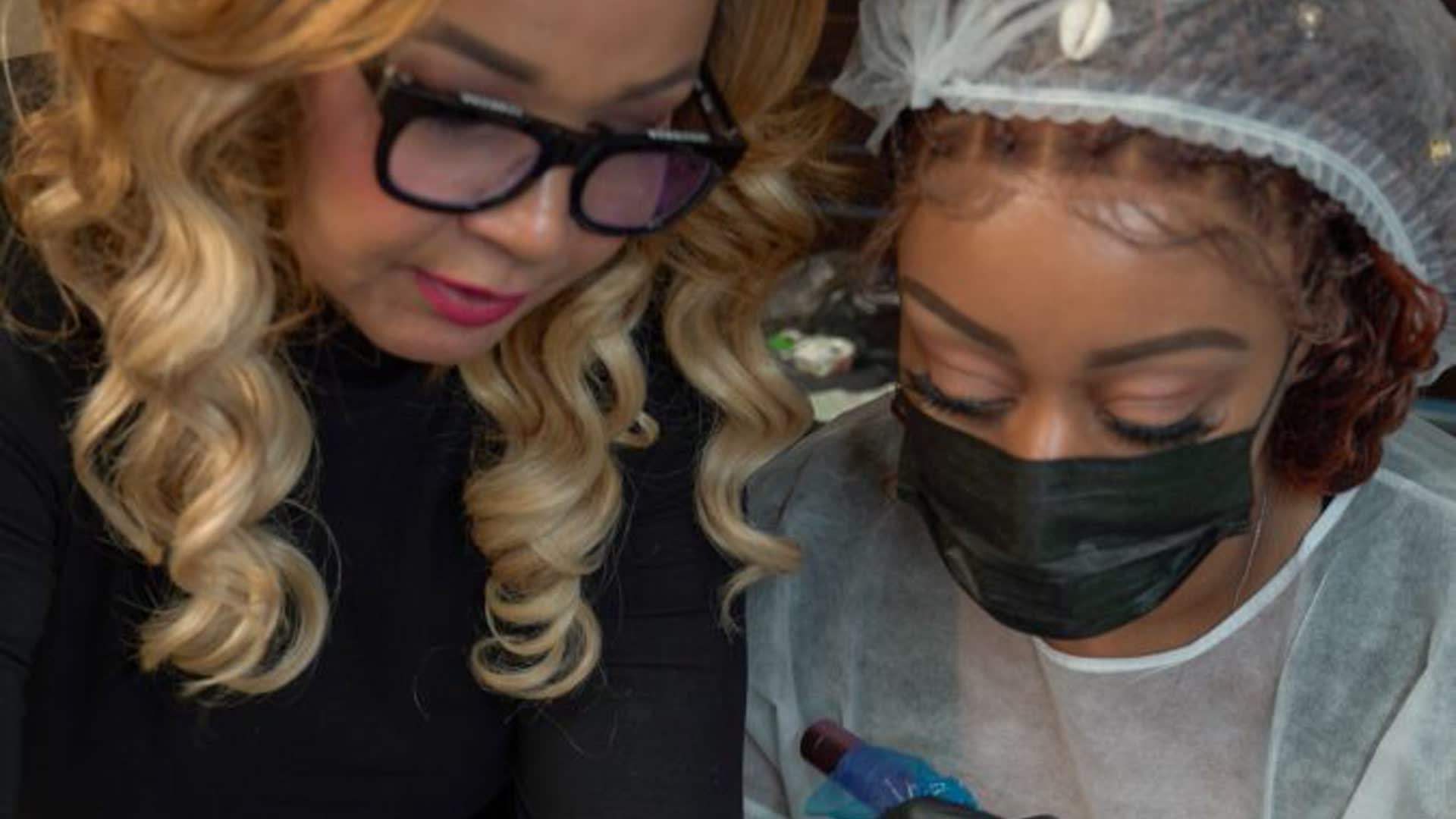
Realistic nipple-areola tattooing performed by Dr. Cecilia Rusnak PhD, LME, DAc, with 32 years of clinical and aesthetic experience. Two-session protocol. Insurance documentation provided.
The procedure
3D Areola Tattoo.
Areola Color Restoration is Dr. Cecilia Rusnak’s complete method for restoring the breast areola complex after mastectomy and reconstruction, and 3D areola tattoo is one of the core techniques inside it. For patients searching for a 3D areola tattoo provider, this is the work: pigment depth, color blending, and dimensional shading delivered as part of a full restoration method developed over decades of clinical practice.
What to expect
Step by step.
ConsultationApprox. 45 minutes · No charge for established reconstruction patients
A private appointment to review your reconstruction history, examine the breast and scar tissue, discuss expectations, and answer questions. You’ll receive a written treatment plan with color samples, diameter, and shape choices. No procedure is performed at this visit.
Initial SessionApprox. 2–3 hours · Both breasts in one session
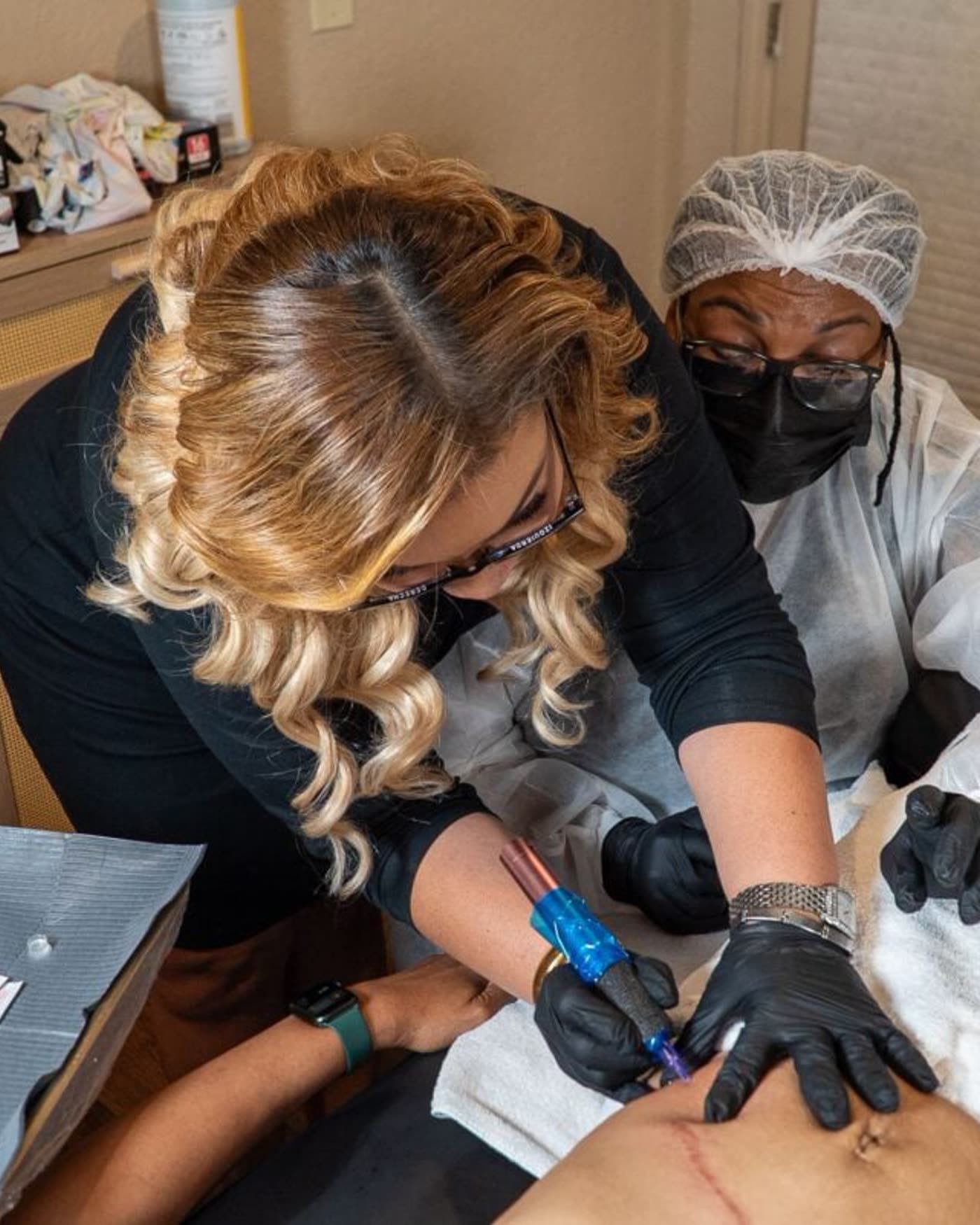
The first pigmentation appointment. Areolas are mapped to the agreed shape and diameter, then color is layered in to establish the base pigment. A topical numbing protocol is used throughout. Aftercare instructions and a take-home kit are provided. Healing takes approximately four to six weeks.
Finalization SessionApprox. 2 hours · Final result evaluated
The follow-up appointment, scheduled four to six weeks after the initial session once healing is complete. Color is adjusted to compensate for how the pigment settled into the skin. Dimensional shading, the highlights, shadows, and Montgomery glands that create the 3D effect, is added in this session.
The Procedure
A paramedical tattoo, not a cosmetic one.
3D areola tattooing creates the appearance of a natural nipple and areola through dimensional color shading. The technique uses medical-grade pigments matched to the patient’s skin tone, layered to suggest depth, the slight darkening at the center, the irregular outer edge, the Montgomery glands. The result is a flat tattoo that reads as a three-dimensional nipple-areola complex.
It is typically performed after the breast mound has been reconstructed, implant-based, DIEP, TRAM, or latissimus dorsi flap, and after any scar tissue has had time to settle. For patients who chose mastectomy without nipple-sparing surgery, or whose nipple complex was removed because of cancer location, this is the procedure that completes the reconstructive process.
The Method
A clinical approach to a clinical procedure.
Dr. Rusnak treats 3D areola restoration the way the procedure was originally intended, as the closing stage of cancer treatment, performed with the discretion, documentation, and clinical rigor that designation requires. Consultations are private. Sessions are unhurried. The work is judged by how it looks twelve months later, not in the moment.
Color match is based on Fitzpatrick skin type, surrounding skin tone, and the patient’s preference for a darker or softer areola. Each areola is shaped to the patient’s anatomy, diameter, position, and symmetry are mapped before pigment is introduced. Dimensional shading is layered in passes, with healing time between sessions so the final result holds its color rather than fading unevenly.
Who This Procedure Serves
Who 3D areola restoration is for.
Post-mastectomy reconstruction. Most 3D areola restoration patients have completed breast reconstruction within the past one to three years and are now at the closing stage of treatment. Some come after implant-based reconstruction; others after DIEP, TRAM, or latissimus dorsi flap procedures. The procedure works whether the patient had a unilateral mastectomy with a matching opposite breast or a bilateral mastectomy requiring restoration on both sides.
Gender-affirming surgery. 3D areola restoration is also a recognized finishing step after gender-affirming chest surgery. For transmasculine patients after top surgery, areola tattooing can recreate or refine the nipple-areola complex, restoring color, dimension, and a position mapped to the patient’s chest. For transfeminine patients, the same technique can build or enhance areola color and definition. The work is approached with the same clinical care, privacy, and discretion as every other case in this practice.
Correction of previous areola tattooing. We also treat patients who had nipple-areola tattooing performed elsewhere and want correction work, shape refinement, color neutralization where the tone has gone wrong, or re-pigmentation where prior work has faded unevenly. Earlier results that healed too light, too dark, or asymmetrically can usually be reworked. Bring photos of the prior work to your consultation so Dr. Rusnak can assess what is achievable.
Patients with radiation-affected tissue, scar irregularities, or other complications from surgery are welcome, these cases are precisely where paramedical experience matters. Every case begins with a consultation, and Dr. Rusnak will tell you honestly what the procedure can and cannot achieve for your skin and tissue.
Insurance and pricing
Often covered under the Women’s Health and Cancer Rights Act.
The Women’s Health and Cancer Rights Act of 1998 (WHCRA) requires group health plans that cover mastectomy to also cover reconstruction, including nipple-areola tattooing as the final stage of the reconstructive process. The relevant CPT codes are 19357 for breast reconstruction and 11920–11922 for intradermal pigment placement.
Healing Skin Medical Aesthetics is a private-pay practice. We do not bill insurance directly, but we provide complete documentation, a procedure summary, CPT code breakdown, medical necessity letter signed by Dr. Rusnak, and itemized invoice, for you to submit to your insurer for reimbursement. Many patients receive substantial reimbursement for this procedure under WHCRA. Your insurer’s coverage and reimbursement terms vary; we recommend confirming details with your plan before scheduling.
For patients not pursuing insurance reimbursement, a consultation will outline the full treatment cost based on bilateral or unilateral work and any additional sessions if needed. Financing through Cherry, Klarna, and Affirm is available.
Procedure summary, CPT codes, medical necessity letter signed by Dr. Rusnak, itemised invoice.
The practice does not bill insurers directly; you submit for reimbursement.
Subject to approval; terms set by the provider.
Breast reconstruction and intradermal pigment placement.
“Every client who walks through our doors carries a story. Our job is to honor that story, and to give them something back that surgery, injury, or time took away.”
Dr. Cecilia RusnakFrequently asked
Questions, answered.
How soon after my reconstruction can I have the areola tattoo done?
Most plastic surgeons recommend waiting at least three to six months after the final reconstructive surgery to allow swelling to resolve and scar tissue to settle. The longer the wait, within reason, the more stable the result. Dr. Rusnak will assess your tissue at consultation and confirm whether you’re ready.
Does the procedure hurt?
Many post-mastectomy patients have reduced or no sensation in the breast tissue, which often makes the procedure less uncomfortable than expected. A topical numbing protocol is used throughout. Most patients describe the experience as easily tolerable, particularly given the emotional weight of what the procedure represents.
Will my insurance cover it?
The Women’s Health and Cancer Rights Act of 1998 mandates that group health plans covering mastectomy also cover the full reconstructive process, including nipple-areola tattooing. In practice, coverage varies by insurer and plan. Healing Skin provides full documentation, medical necessity letter, CPT codes, itemized invoice, to support your reimbursement claim. We recommend confirming coverage with your plan before scheduling.
How long does the result last?
Properly performed 3D areola tattoos typically last several years, with gradual softening rather than visible fading. A touch-up session every three to five years is common to refresh the dimensional effect. Skin type, sun exposure, and individual pigment retention affect longevity.
What if I had areola tattooing done elsewhere and want it corrected?
Correction work is a substantial part of Dr. Rusnak’s practice. Common reasons patients come for correction include shape that needs refinement, color that healed darker or lighter than expected, areolas placed too far apart or asymmetrically, or pigment that has faded unevenly. A consultation will determine whether the existing tattoo can be corrected or whether neutralization and re-pigmentation are needed.
Do I need a referral from my plastic surgeon?
No referral is required to book a consultation. We encourage you to inform your plastic surgeon and oncologist that you’re pursuing this final stage of reconstruction, and we coordinate with the rest of your care team when appropriate.
Real results
See the work.
Before and after results from Dr. Rusnak’s patients, shared with permission.
Individual results vary. Paramedical work reduces the visual contrast of scars, stretch marks and areola loss; it does not erase permanent tissue change. The number of sessions differs by case.
Continue your results at home
Take-home support from Dr. Rusnak Wellness.
Physician-formulated skincare and aftercare from Dr. Rusnak’s own line, chosen for this procedure.

Scar Repair Silicone Gel
Most areola restoration clients have surgical scars from mastectomy or reconstruction. Medical-grade silicone keeps scar tissue hydrated, softens texture, and protects the freshly tattooed 3D areola from friction, pigment loss, and UV-induced color shift during the 4–6 week settling phase.

Healing Support SPF 40
UV is the #1 cause of 3D areola pigment fading. Healing Support SPF 40 is a mineral broad-spectrum sunscreen we recommend applying daily once your areola tattoo has healed (typically after week 2) — it preserves the natural color depth and dimension of the work for years.

Calm Flow Water Cream
Reconstructed breast skin is often thin and reactive. This fragrance-free water cream keeps the surrounding tissue hydrated and calm during the areola tattoo healing window — gentle enough to layer over the treatment site once the initial scab has shed.
Begin
When you’re ready, we are too.
A private conversation with Dr. Rusnak, at the clinic in Kissimmee or by video call. No pressure, no obligation.
1107 Person Street, Kissimmee, Florida 34741 · (689) 288-8011 · info@healing-skin.com
For practitioners: Dr. Rusnak teaches this work at Dr. Rusnak Academy, a private certifying body for its own programs. Healing Skin is the Academy’s clinical home.