

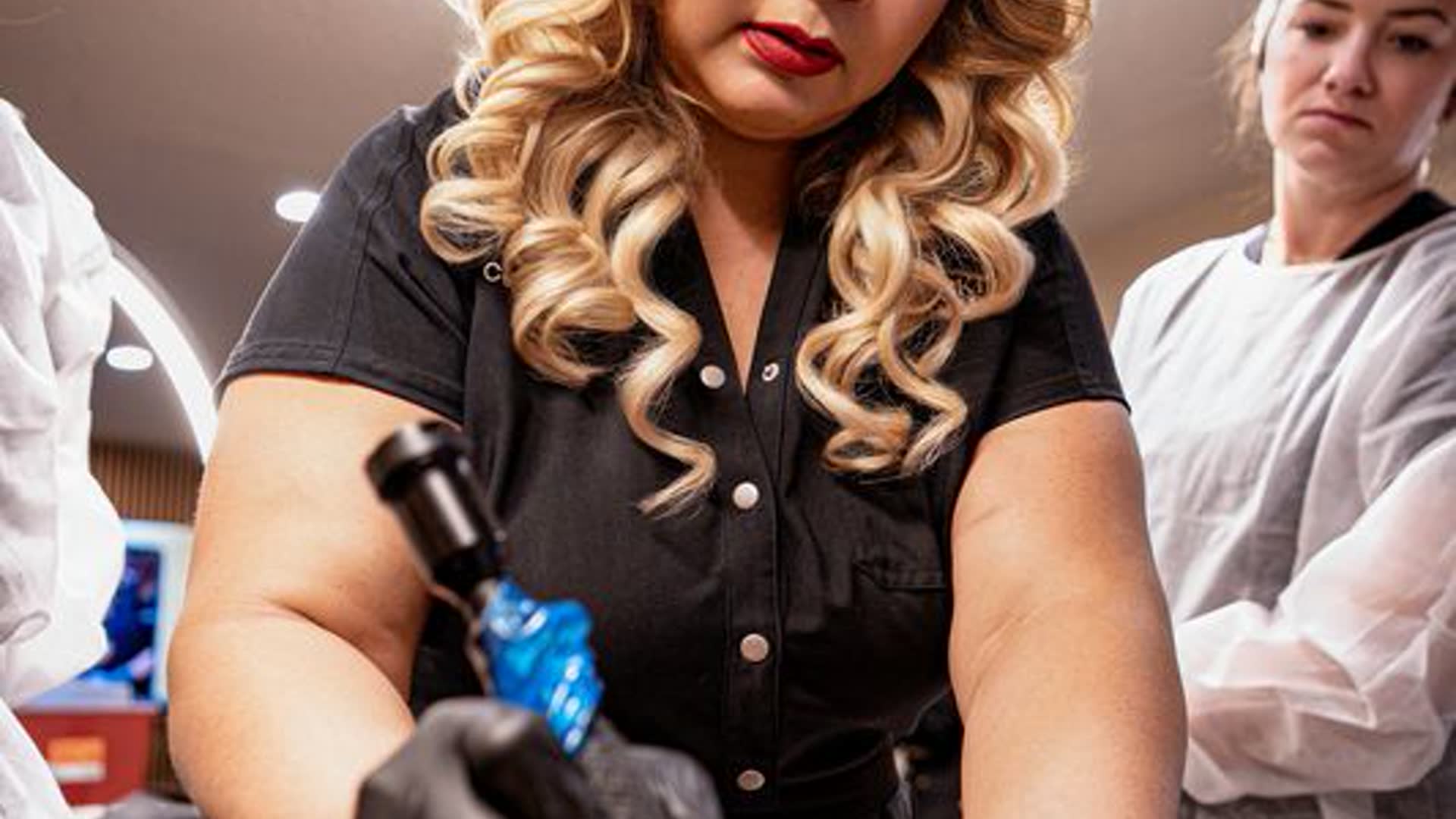
Paramedical Scar Camouflage
Scar Camouflage
by Dr. Cecilia Rusnak.
Paramedical pigment work that blends surgical, accident, and burn scars back into the surrounding skin. Performed by Dr. Cecilia Rusnak at Healing Skin Medical Aesthetics in Kissimmee, Florida.
The Procedure
Pigment work matched to your skin.
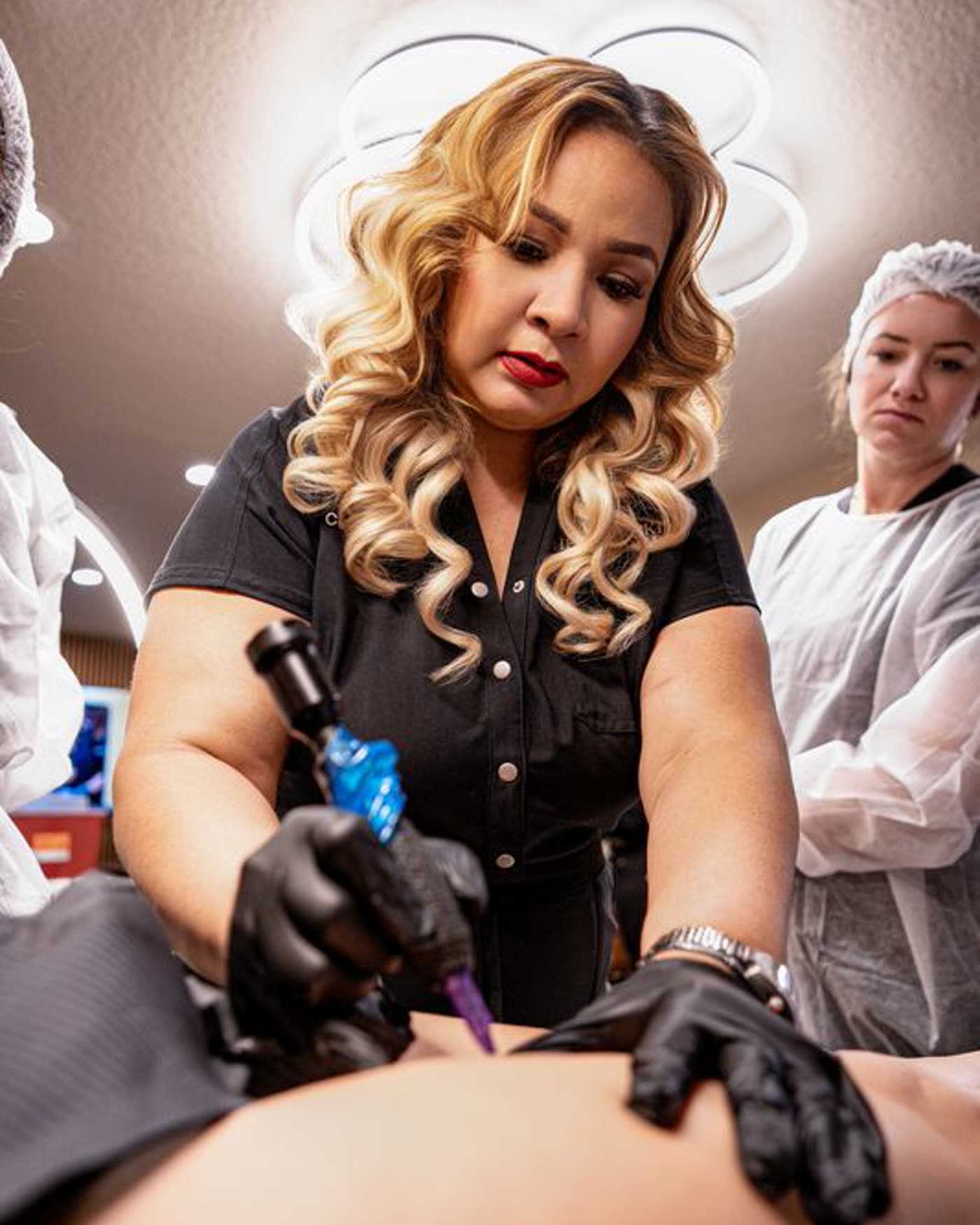
Dr. Rusnak begins every scar camouflage with a Fitzpatrick skin type assessment and color matching to the surrounding skin tone. Medical-grade pigments are layered in passes, never in a single saturated session, because mature scar tissue accepts pigment differently from healthy skin. Multiple passes give the skin time to heal and the color time to settle, which is what makes the work hold up over years rather than fading unevenly.
The procedure is performed in private treatment rooms with topical numbing applied throughout. Most patients describe the sensation as mild, the area being treated has often lost sensation already because of the original injury or surgery. Aftercare is straightforward: keep the area dry, avoid sun exposure during healing, and follow the standard post-procedure protocol.
What to expect
Step by step.
ConsultationApprox. 45 minutes
A private appointment to evaluate the scar, its age, depth, tissue quality, and the surrounding skin tone. Dr. Rusnak will outline a realistic treatment plan with expected number of sessions and what the result will look like. No procedure at this visit.
Initial SessionApprox. 1–2 hours · Depending on scar size
The first pigmentation appointment. Color is matched and laid in carefully, typically a single pass on the first session. Healing follows for four to six weeks before the next pass is evaluated.
Follow-up SessionsUntil result is achieved
Most scars require two to four total sessions to reach the patient’s goal. Each follow-up evaluates pigment retention, adjusts color, and adds layered passes where needed. Sessions are spaced four to six weeks apart.
Who This Procedure Serves
For patients with well-healed scars.
Scar camouflage is appropriate for surgical scars, accident scars, burn scars, vitiligo patches, and other areas of skin tone irregularity, provided the underlying tissue is fully healed. Most plastic surgeons recommend waiting twelve months after the original surgery or injury before pursuing camouflage work, though the exact timeline depends on the scar.
Dr. Rusnak frequently works with breast cancer survivors after mastectomy reconstruction, burn survivors, abdominal surgery patients, accident survivors, and individuals with vitiligo seeking color restoration. The procedure is not appropriate for active keloids, recent scars still in the early healing phase, or scars on certain anatomical locations, Dr. Rusnak will assess this at consultation.
Frequently asked
Questions, answered.
How many sessions will I need?
Most patients need two to four sessions to reach their goal. Smaller, well-healed scars sometimes resolve in two sessions; larger scars or scars with significant color variation may need more. Dr. Rusnak will give you a realistic estimate at consultation.
Will the scar be completely invisible?
Honest answer: no. Scar camouflage reduces the visual contrast between the scar and surrounding skin so the scar becomes significantly less noticeable. The texture of the scar tissue remains. The goal is restoration to a degree that you stop noticing the scar in daily life, not a literal disappearance.
How long does the result last?
Properly performed scar camouflage typically holds for several years before any touch-up becomes worthwhile. Sun exposure, skin type, and the specific pigment depth all affect longevity. We recommend SPF on the area at all times.
Does it hurt?
A topical numbing protocol is used throughout. Most patients report mild discomfort at most. Scar tissue often has reduced sensation already, which tends to make the procedure easier than expected.
How soon after my surgery can I have this done?
Generally, at least twelve months after the original surgery or injury. Healing varies by patient, Dr. Rusnak will assess the tissue at consultation and confirm whether the scar is mature enough for camouflage work.
Real results
See the work.
Before and after results from Dr. Rusnak’s patients, shared with permission.
Individual results vary. Paramedical work reduces the visual contrast of scars, stretch marks and areola loss; it does not erase permanent tissue change. The number of sessions differs by case.
Continue your results at home
Take-home support from Dr. Rusnak Wellness.
Physician-formulated skincare and aftercare from Dr. Rusnak’s own line, chosen for this procedure.

Scar Repair Silicone Gel
Medical-grade silicone is the gold standard for keeping scar camouflage crisp during the 4–6 week settling phase. Applied twice daily after your scar camouflage session, it keeps tissue hydrated, prevents pigment migration, and protects the new color from UV breakdown and friction-induced fading.

Healing Support SPF 40
UV exposure is the fastest way to ruin scar camouflage work. Healing Support SPF 40 is the mineral broad-spectrum daily defense we send home with every camouflage client — apply every morning and reapply mid-day for the lifetime of the tattoo.

Anti-Aging Body Moisturizer with Retinol
Once your scar camouflage has fully healed (typically after week 4), this retinol body cream supports continued collagen turnover in and around the treated area. It firms surrounding skin and helps the camouflaged scar blend even more seamlessly over time.
Further reading
From the Journal.
Begin
When you’re ready, we are too.
A private conversation with Dr. Rusnak, at the clinic in Kissimmee or by video call. No pressure, no obligation.
1107 Person Street, Kissimmee, Florida 34741 · (689) 288-8011 · info@healing-skin.com
For practitioners: Dr. Rusnak teaches this work at Dr. Rusnak Academy, a private certifying body for its own programs. Healing Skin is the Academy’s clinical home.