How to Choose Scar Camouflage Products — 7 Honest Picks
If you have been researching solutions for visible scars, you have probably discovered that the product landscape is confusing. Drugstore aisles carry dozens of scar treatments, specialty cosmetic brands market camouflage makeup ranges, and paramedical pigment manufacturers offer professional-grade systems used only by trained clinicians. The products differ enormously in what they actually do, who they serve, and what results they can realistically produce.
This guide walks you through the categories of scar camouflage products that actually work, the situations each is best suited for, and how to tell professional-grade solutions from marketing claims. It was written with input from Healing Skin Medical Aesthetics founder Dr. Cecilia Rusnak — an acupuncture physician and Doctor of Oncology Pain Management with over three decades of clinical experience using, evaluating, and teaching with these products.
Understanding What “Scar Camouflage” Actually Means
The term “scar camouflage” gets used loosely and can mean several different things. Before you buy anything, it is important to understand what category of product you actually need. Scar camouflage can refer to topical treatments that change the appearance of scar tissue over time, cosmetic products that cover scars temporarily, paramedical pigments used by clinicians to deposit color into the scar itself, or supportive aftercare products that improve how scars heal in the first place.
Each of these categories has legitimate uses and legitimate products. The right choice depends on your scar maturity, your goals, your skin type, and whether you plan to address the scar professionally or manage it yourself. Mixing up categories leads to disappointment. Using a scar-fading silicone gel when you really need camouflage makeup will not give you daily coverage. Using makeup when your scar is actually treatable with professional pigment integration wastes years of daily application time.
Professional Paramedical Pigments
Professional paramedical pigments are medical-grade color systems used only by trained paramedical tattoo artists. These pigments are engineered specifically for depositing into scar tissue, which often responds differently than normal skin to color. Professional pigment lines include custom-mixed formulations designed to match any skin tone after proper Fitzpatrick and undertone analysis.
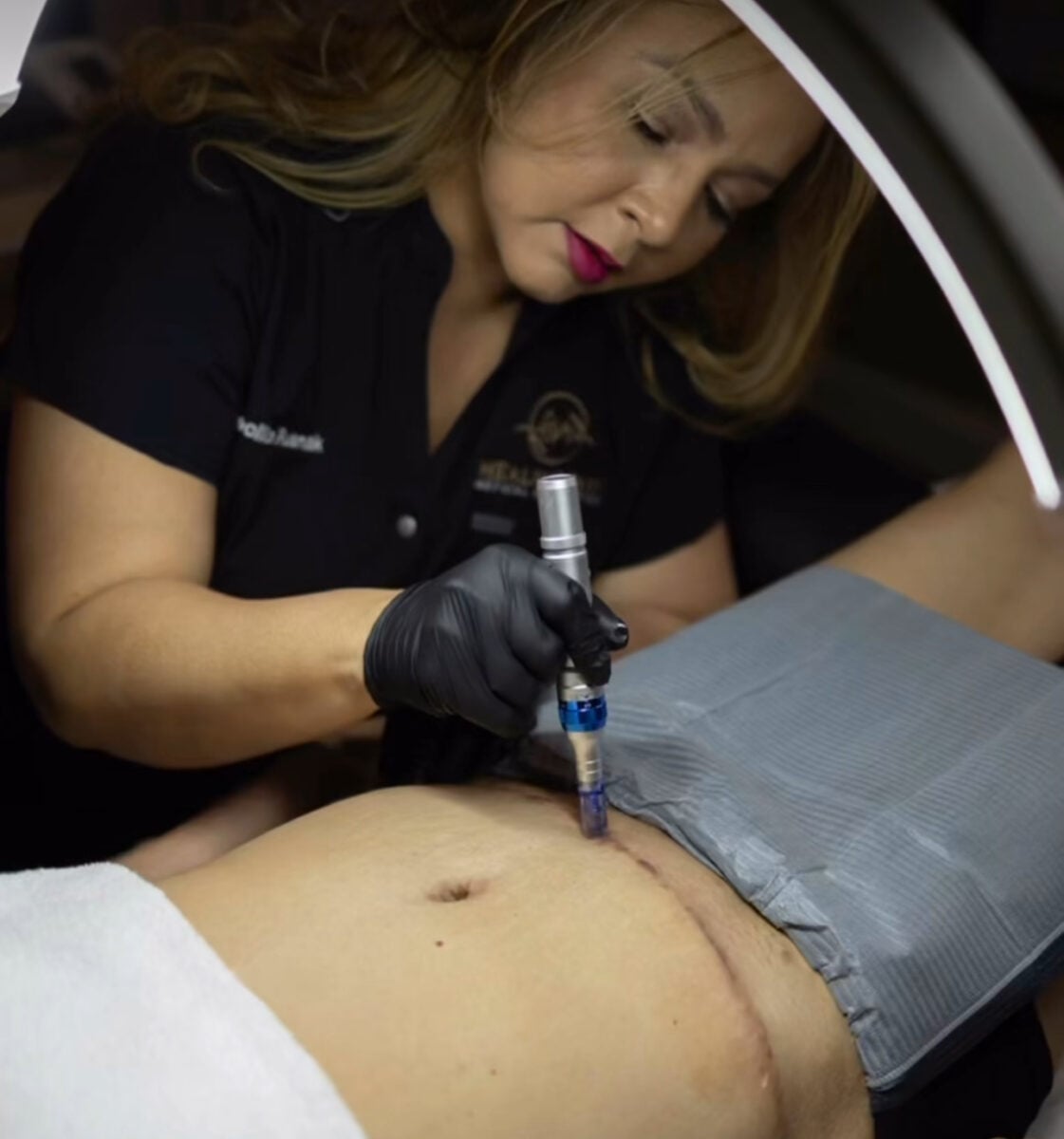
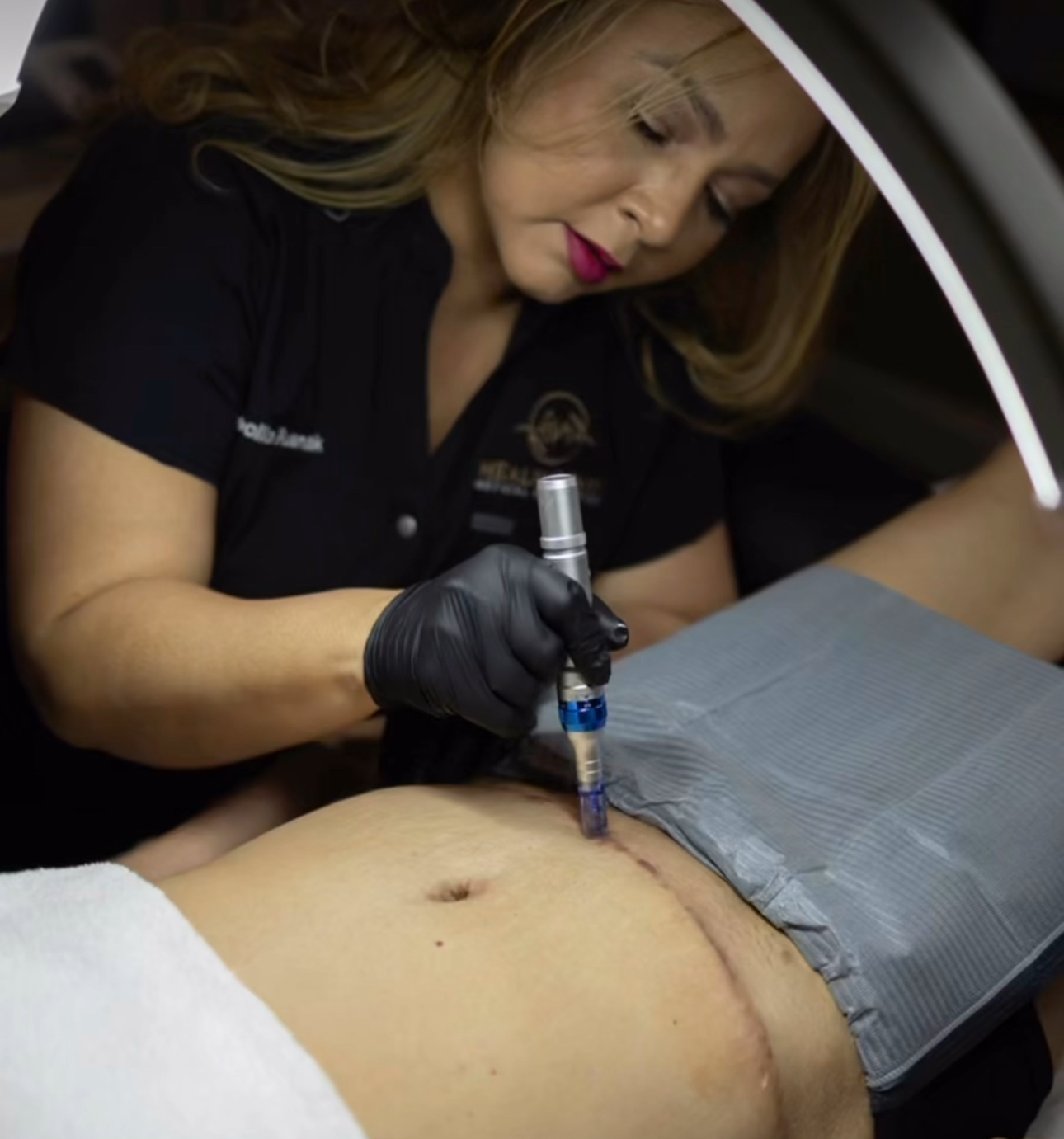
The pigment systems Dr. Rusnak works with at Healing Skin Medical Aesthetics are engineered specifically for paramedical work on compromised skin — scars, stretch marks, and reconstructed tissue. These are not DIY products; they require clinical training, sterile equipment, and proper needle depth calibration to use safely and effectively. If you are considering scar camouflage tattooing or Areola Color Restoration (3D areola technique) restoration, the pigment quality your artist uses directly determines your result.
When evaluating a paramedical tattoo artist, ask what pigment brand they use and why. Good artists will readily explain their choice and the reasoning. They will also be able to discuss how they handle pigment for different skin tones, what pigment changes they expect during healing, and how the pigment is expected to age over 5 to 10 years. This information should be at their fingertips.
Medical-Grade Scar Camouflage Makeup
Medical-grade camouflage makeup is a separate category from everyday foundation or concealer. These are cosmetic products specifically formulated for covering significant pigmentation differences, scarring, vitiligo, tattoos, and birthmarks. The leading brands in this category have been developed over decades specifically for the needs of people with visible scars.
Key brands in this space include Dermablend Professional (probably the most widely recognized), Kryolan Dermacolor (heavily used in film/theater but also in daily camouflage), Keromask (British brand popular with scar patients), Covermark (Italian brand with strong dermatological credentials), and Microskin (custom-matched liquid formulations). These brands carry higher pigment density, better adhesion, longer wear, and more transfer-resistance than mass-market makeup.
Good camouflage makeup is not a single product — it is a system. A complete routine typically involves color corrector (neutralizing the scar’s color), foundation matched to your surrounding skin tone (restoring the natural color), and a setting powder or fixing spray (locking the makeup in place for 8 to 16 hours of wear). Brands typically sell these as coordinated ranges so the products work together.
Professional application matters. Most medical-grade camouflage brands offer application training or have partner makeup artists trained in their products. If you are serious about using camouflage makeup long-term, a one-time training session with a qualified makeup artist is a worthwhile investment. You learn color-matching, layering technique, and products that suit your specific scar type.
Silicone-Based Scar Products
Silicone-based products are a completely different category. Rather than covering scars, they treat the scar tissue itself over time, gradually improving appearance, texture, and in some cases color. Silicone has been used in scar management since the 1980s, and the clinical evidence supporting its use is significant — the National Library of Medicine documents multiple studies showing silicone sheets and gels improve hypertrophic and keloid scars over a 3-to-6-month application period.
Silicone products come in two main formats: silicone sheets (adhesive strips worn for 12-24 hours per day) and silicone gels (liquid formulations painted onto the scar and left to dry, used once or twice daily). Both work by the same general mechanism: maintaining hydration and reducing the trans-epidermal water loss that drives excess collagen production in hypertrophic scars.
Well-regarded silicone products include ScarAway, bioCorneum, Kelo-Cote, and Rejuvaskin Scar Fx. These are over-the-counter products available at pharmacies or online. Expect to apply consistently for at least 12 weeks to see meaningful results. Silicone works best on hypertrophic (raised) or early-stage scars; it has limited effect on mature hypopigmented (lighter than surrounding skin) scars, which is where paramedical tattoo camouflage becomes the stronger option.
Aftercare Products for Healing Compromised Skin
Whether you are treating a scar professionally with paramedical tattoo, using silicone products, or applying daily camouflage makeup, the quality of your skin care during healing and in daily life affects your results. This is where medical-grade aftercare products become important.
The Dr. Rusnak Wellness product line was specifically formulated for skin that has been through clinical treatment — including paramedical tattoo healing periods, post-microneedling collagen remodeling, and scar maturation phases. The Scar Gel is designed to support scar tissue quality during healing. The BioPeptide Growth Factor Serum helps support skin recovery during collagen-building windows. The Body Lotion is formulated for use on stretch marks and body scars. These products complement, rather than replace, other scar management strategies.
What to look for in aftercare products: medical-grade rather than generic cosmetic formulations, ingredients supported by clinical research (peptides, growth factors, hyaluronic acid, niacinamide), absence of fragrance and common irritants for compromised skin, and formulations matched to your specific need (facial scars versus body scars versus post-surgical wounds have different requirements).
Color Correctors for Specific Scar Types
If your scar has a distinct undertone — pink, red, purple, brown, or green — you may benefit from a dedicated color corrector applied under your camouflage makeup foundation. Color correctors work by neutralizing the unwanted tone before you apply the base color that matches your skin.
For red or pink scars (common in young, immature scars), green correctors neutralize. For purple or blue scars (common in older scars on lighter skin), yellow or peach correctors neutralize. For brown or hyperpigmented scars, a lighter concealer in your skin tone usually works better than a corrector. For very white or hypopigmented scars (common on darker skin), a pigmented highlighter matched to your natural skin tone works best.
Most medical-grade camouflage brands (Dermablend, Kryolan, Keromask) offer color correctors as part of their ranges. Learning to use them well takes practice, but the difference between correctly-corrected and uncorrected camouflage makeup is significant — properly corrected foundations look natural, while uncorrected ones often look chalky or reveal the scar through the makeup.
Sun Protection as the Most Important Scar Product
If you only buy one category of product for scar management, make it broad-spectrum SPF. Scars are significantly more susceptible to UV damage than surrounding skin, and sun exposure on healing or mature scars causes permanent hyperpigmentation that is very difficult to treat. This is true for every scar type, every skin tone, and every stage of scar maturation.
Use broad-spectrum SPF 30 or higher on any visible scar every day, year-round, indoor and outdoor. Re-apply every 2 hours during prolonged sun exposure. Mineral (zinc oxide, titanium dioxide) formulations are generally gentler on healing scars than chemical sunscreens. For scars in swimwear or clothing-exposed areas, water-resistant formulations are essential.
Sun protection is especially important in the first 12 to 18 months after your scar forms, when the skin is most vulnerable to UV-induced pigmentation changes. It is also critical during and after paramedical tattoo treatment, when the pigment is settling and vulnerable to photo-fading. Dr. Rusnak instructs every paramedical tattoo patient to use SPF 30+ daily on the treated area for at least 6 months after final treatment, and ideally indefinitely.
How Dr. Rusnak’s Clinical Background Informs Product Choice
Not every product in the scar camouflage space is worth its price. Some products are effectively marketing hype with limited clinical backing. Others are clinically proven but overpriced relative to alternatives. A few are genuinely outstanding and deserve the investment.
Dr. Rusnak’s clinical foundation — a Doctorate in Oncology Pain Management from Pacific College of Health and Science, a Master of Science in Oriental Medicine, and over 15 years running her integrative wellness practice at AcuMedGroup Wellness Center — gives her a unique perspective on scar management products. She has seen what works and what does not across hundreds of patients with varying scar types, skin tones, and healing responses.
The product recommendations she makes at Healing Skin Medical Aesthetics consultations reflect this clinical judgment. She will tell you honestly if your scar is better served by daily silicone treatment for 6 months than by jumping straight to paramedical tattoo. She will tell you if camouflage makeup is the right bridge until your scar is mature enough for paramedical treatment. And she will point you to the specific products — whether in her own Dr. Rusnak Wellness line or from outside brands — that best fit your situation, even if that means recommending something she does not sell.
Products and Claims to Be Skeptical Of
The scar treatment market includes products with limited or no clinical evidence supporting their marketing claims. Being able to recognize these saves you money and avoids disappointment.
Vitamin E oil has been marketed for scar improvement for decades, and patient surveys show many people believe it works. The clinical evidence is weak. Controlled studies have generally shown vitamin E oil does not significantly improve scar appearance compared to control, and in some patients it can cause contact dermatitis that worsens scar tissue. If you like the feel of vitamin E oil, it is not harmful for most people, but do not expect meaningful scar improvement from it alone.
“Scar removal creams” that promise complete scar disappearance are almost always overstating. No topical cream can truly erase a mature scar. Real scar management products reduce visibility progressively; they do not eliminate. Any product that promises dramatic before-and-after results in a short period should be approached with skepticism.
Onion extract products have mixed evidence. Some studies show modest improvement in keloid and hypertrophic scars; others show no significant effect over placebo. If your scar is hypertrophic or keloid, these products may be worth trying as a lower-cost alternative before considering professional treatments, but manage your expectations.
DIY paramedical tattoo kits marketed to consumers are dangerous and should never be used. Paramedical tattoo requires sterile technique, proper needle depth calibration, pigment color-matching expertise, and contraindication recognition. Attempting this on your own skin or a friend’s skin creates real risk of infection, permanent scarring from the procedure itself, and pigment mismatch that is impossible to correct without professional intervention.
Building Your Scar Management Strategy
The best scar camouflage strategy typically combines multiple product categories rather than relying on any single product. A patient with a fresh surgical scar might use silicone gel daily for the first 6 months, medical-grade SPF continuously, and color-corrected camouflage makeup for special events. After the 12 to 18-month scar maturation period, they might transition to paramedical tattoo camouflage for permanent integration, using medical-grade aftercare products during and after the treatment series.
This staged approach uses each category of product at the stage when it is most effective and avoids the common mistakes of using the wrong product at the wrong time. The right sequence saves you money, time, and frustration compared to random trial-and-error across unsuitable products.
If you would like a professional assessment of your specific situation and a tailored recommendation for scar camouflage products — including whether paramedical tattoo treatment is the right next step — Dr. Rusnak offers consultations where she evaluates your scar honestly and maps out a realistic plan. There is no pressure to book treatment. Many patients leave their consultation with a recommended product regimen and a plan to return in 6 to 12 months once their scar is ready for the next stage. Call (689) 288-8011 to schedule, or explore related treatments including Brazilian stretch mark camouflage, Advanced ISR Inkless, or collagen induction therapy.
Why Professional Scar Camouflage Products Matter
The quality of scar camouflage products varies significantly between drugstore topicals, professional aesthetician formulations, and medical-grade options. Drugstore scar camouflage products typically offer temporary concealment through pigmented formulations that last a single day. Professional options include silicone-based scar gels that support scar maturation over weeks to months. Medical-grade options like those used in clinical paramedical tattooing produce semi-permanent results integrating pigment directly into the skin.
How to Choose the Right Scar Camouflage Products
Choosing the best scar camouflage products depends on scar maturity, skin tone, scar type, and your tolerance for ongoing application. Fresh scars benefit most from silicone-based scar camouflage products during the maturation phase (typically 3-12 months post-injury). Mature scars with significant color contrast are excellent candidates for paramedical tattoo camouflage, which provides permanent color correction without daily product application. For in-person evaluation of your scar and the right approach, visit our scar camouflage treatment page.
Continue Your Results at Home
Recommended take-home support from Dr. Rusnak’s physician-formulated skincare line. Shop the full collection on Dr. Rusnak Wellness →

Scar Repair Silicone Gel
Medical-grade silicone is the gold standard for protecting freshly treated tissue. Used twice daily after scar camouflage and recovery care, it keeps the area hydrated, softens texture, reduces redness, and locks in your results during the critical settling weeks.

Anti-Aging Body Moisturizer with Retinol
A retinol-driven body cream that picks up where scar camouflage and recovery care leave off. It firms, smooths, and reinforces collagen turnover on stretch marks, slack skin, and treated body zones — use nightly to extend your in-clinic results.

Healing Support SPF 40
Healing Support SPF 40 is the daily UV armor we send home with clients receiving scar camouflage and recovery care. Broad-spectrum mineral SPF prevents pigment shift, post-inflammatory hyperpigmentation, and premature fading — apply every morning, reapply mid-day.