Paramedical vs Cosmetic Tattooing — 5 Honest Differences
Paramedical vs cosmetic tattooing — the two disciplines look superficially similar but require different training, different pigment knowledge, and different clinical thinking. Cosmetic tattooing enhances features (microblading, eyeliner, lip blush); paramedical tattooing restores tissue (scar camouflage, areola color restoration, stretch mark work). This guide compares the work and the careers.
Paramedical Tattooing vs Cosmetic Tattooing: What’s the Difference, and Which Career Fits You?
A side-by-side comparison of two very different career paths in the tattoo and aesthetics industry
By Dr. Cecilia Rusnak PhD, LME, DAc | Founder, Healing Skin Medical Aesthetics
Published 2026 | healing-skin.com
If you are researching a career in the tattoo or aesthetics industry, one of the most important distinctions you will encounter is the difference between Paramedical Tattooing vs Cosmetic Tattooing. Understanding paramedical tattooing vs cosmetic tattooing is essential before investing in training or choosing a provider. These two career paths share some foundational techniques — both involve depositing pigment into the skin with precision tools — but their purpose, training depth, client populations, income potential, and emotional significance are fundamentally different. Understanding Paramedical Tattooing vs Cosmetic Tattooing can help you choose the right career path.
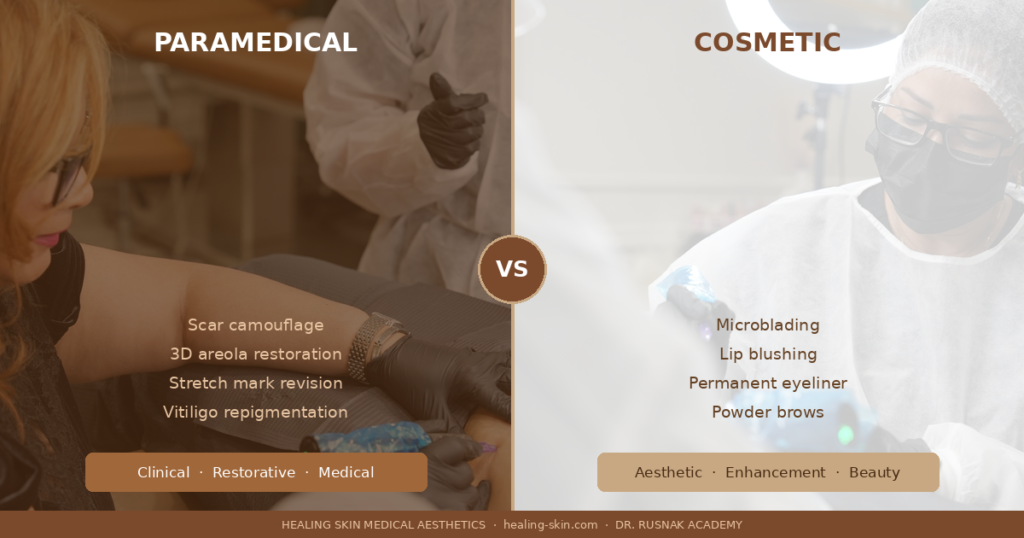
Cosmetic tattooing, also known as permanent makeup or PMU, focuses on enhancing natural features: fuller brows through microblading, tinted lips through lip blushing, defined eyes through permanent eyeliner. It is driven by beauty, convenience, and daily makeup replacement.
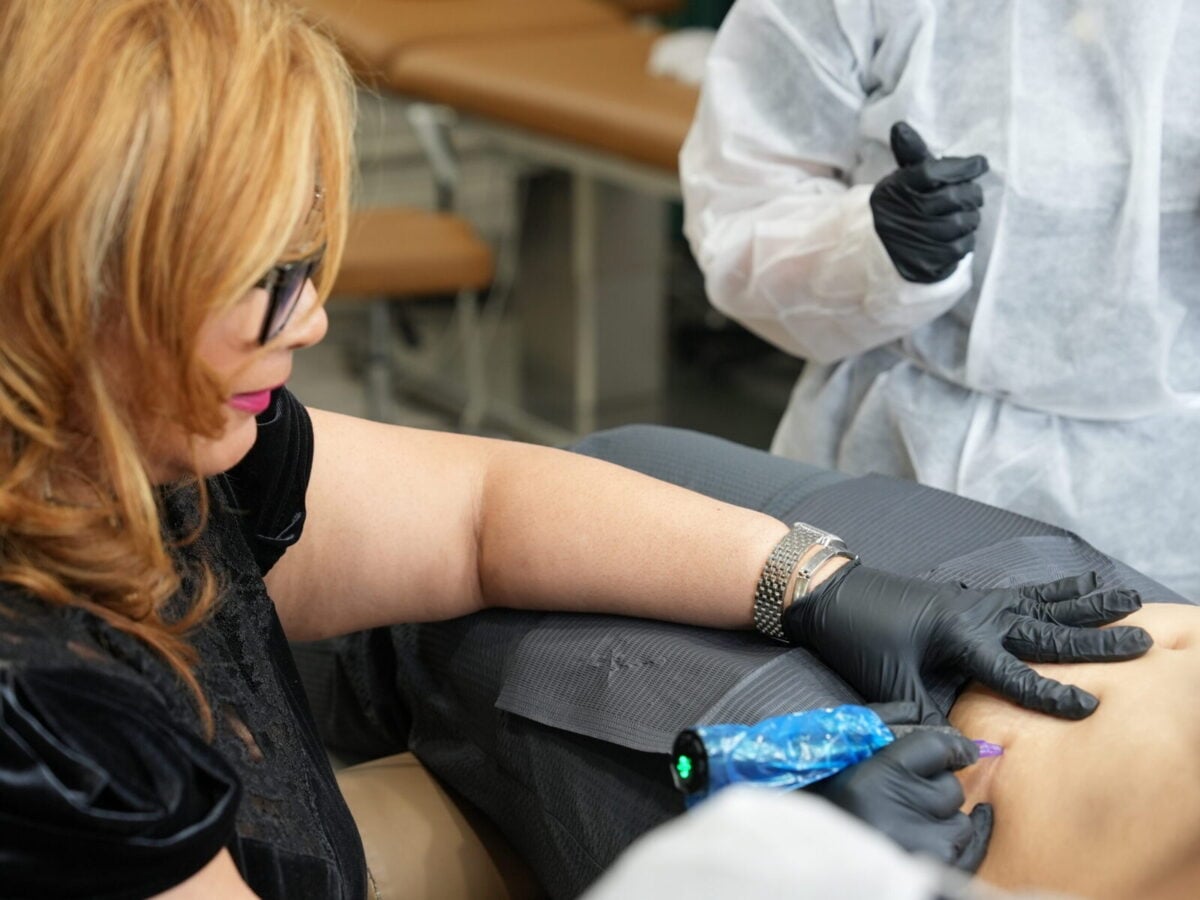
Paramedical tattooing, by contrast, is clinical and restorative. It serves breast cancer survivors who need Areola Color Restoration (3D areola technique) reconstruction after mastectomy. It serves burn patients and trauma survivors who need scar camouflage. It serves individuals with vitiligo, surgical scars, stretch marks, and skin conditions that affect their confidence and quality of life. This is not cosmetic enhancement. It is medical-grade skin restoration.
When considering Paramedical Tattooing vs Cosmetic Tattooing, it’s essential to evaluate how each discipline impacts clients’ lives and the skill set required to succeed in each field.
This guide compares these two career paths across every dimension that matters: what you will actually do, who you will serve, how much you can earn, what training requires, and how each path positions you professionally for the next decade.
The Side-by-Side Comparison: Paramedical Tattooing vs Cosmetic Tattooing
Before diving into the details, here is a comprehensive comparison of paramedical tattooing vs cosmetic tattooing across the categories that matter most to practitioners, students, and career changers:
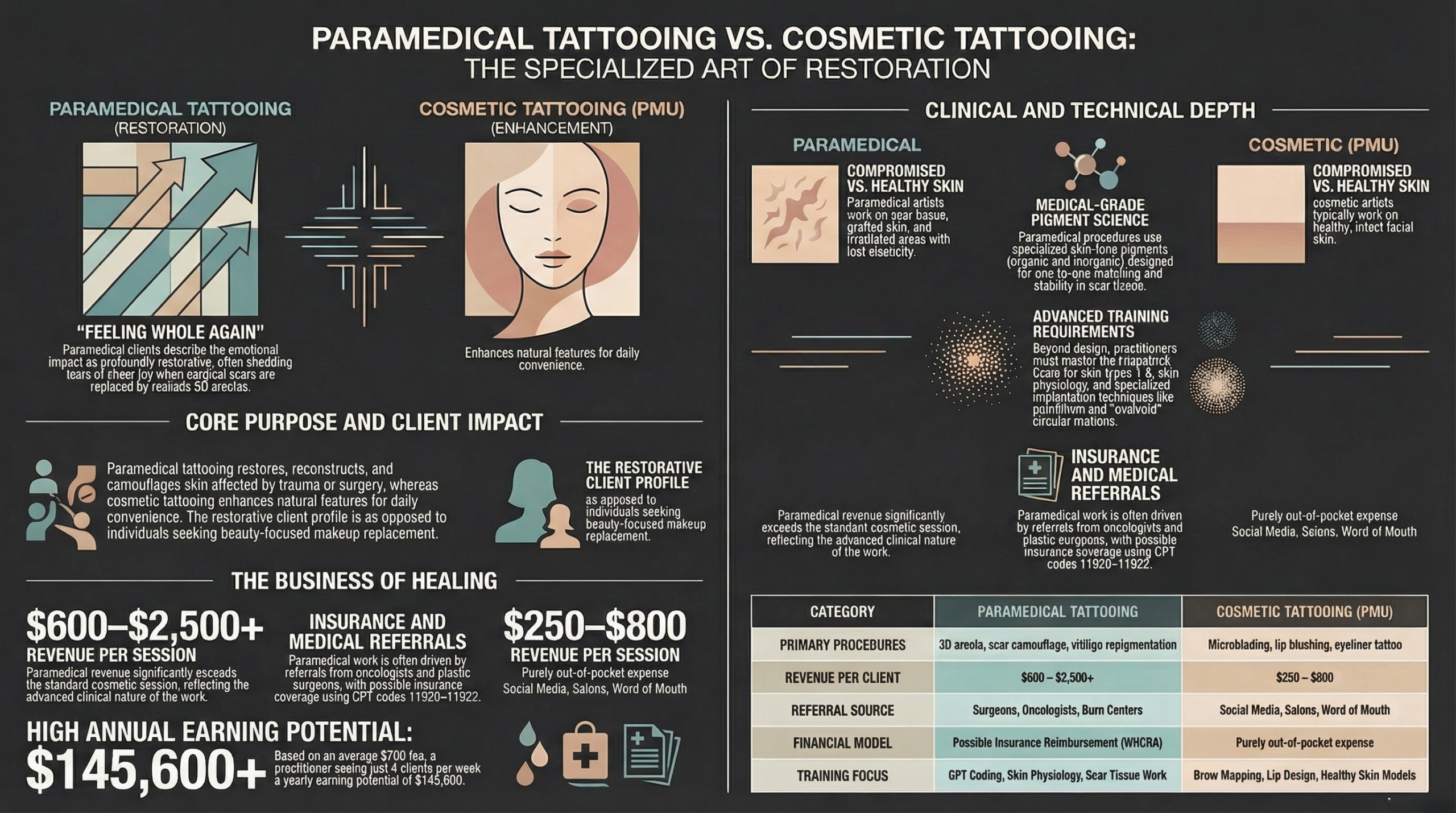
The table makes it clear: while both paths involve skilled pigment work, paramedical tattooing vs cosmetic tattooing represents a distinction between aesthetic enhancement and clinical restoration. The career implications of this difference are significant.
The contrast between Paramedical Tattooing vs Cosmetic Tattooing extends beyond technique. It influences how practitioners are perceived in the market.
Service Pricing Comparison: What Does Each Career Actually Pay?
Income is often the first question career changers ask. The data paints a compelling picture. According to ZipRecruiter, the average annual salary for a paramedical tattoo artist in the United States is approximately $75,700, with top earners reaching $150,000 or more. Glassdoor reports the average permanent makeup artist salary at around $105,000, though this figure includes high-volume urban practices and artists offering multiple PMU services.
However, these averages obscure a critical variable: revenue per client. Paramedical tattoo artists typically charge $600 to $2,500 or more per treatment session. Scar camouflage, stretch mark revision, and 3D areola work command premium pricing because the procedures are technically demanding, emotionally significant, and often involve multiple sessions.
Cosmetic tattoo artists, by comparison, typically charge $250 to $800 per session for services like microblading, powder brows, and lip blushing. The volume can be higher, but the per-client revenue is lower, and the market is significantly more competitive. The barrier to entry for cosmetic PMU is lower, which means more practitioners are competing for the same local client base. When evaluating paramedical tattooing vs cosmetic tattooing from a purely financial perspective, the per-client revenue gap is significant.
The key insight: paramedical tattooing operates in a high-value, low-competition niche. Fewer practitioners are trained to work on scar tissue, irradiated skin, and compromised anatomy. The clients who need this work are underserved, and the referring physicians — plastic surgeons, oncologists, dermatologists — are actively looking for qualified artists to refer to.
In summary, the significance of Paramedical Tattooing vs Cosmetic Tattooing is evident in the career choices available.
Training: What Each Path Requires
The training required for paramedical tattooing vs cosmetic tattooing differs in both depth and clinical rigor.
In conclusion, understanding Paramedical Tattooing vs Cosmetic Tattooing will allow aspiring artists to make informed decisions about their future.
Cosmetic tattoo (PMU) training
Most microblading and permanent makeup courses run 2 to 4 days and focus on brow mapping, lip design, cosmetic color theory, and technique practice on latex or healthy skin models. Pricing ranges from $2,000 to $5,000 depending on the academy. Certification allows the graduate to begin offering cosmetic services immediately, though building a clientele in a crowded market requires significant marketing investment.
Paramedical tattoo training
Paramedical certification programs cover fundamentally different ground. The training required for paramedical tattooing vs cosmetic tattooing differs in both depth and clinical rigor. At Dr. Rusnak Academy, the 3-Day Paramedical Tattoo Certification includes three distinct certifications — Advanced ISR Inkless Stretch Mark Revision, Stretch Mark Camouflage, and Scar Camouflage (covering white scars, vitiligo, tummy tuck and breast lift scars, age spots, and scar lightening). The curriculum includes:
- Skin physiology, Fitzpatrick scale assessment, and melanin distribution
- Medical-grade color theory for matching skin tones on compromised tissue
- Live demonstrations and hands-on work with real clients on scar tissue
- CPT billing codes, insurance reimbursement documentation, and medical necessity letters
- Business startup strategy, model call frameworks, and physician referral development
- A professional NUE Conceal kit worth over $4,000, including skin tone reader technology
- Lifetime mentorship and ongoing clinical support from Dr. Cecilia Rusnak
The tuition is $5,900 with a $1,000 deposit. No prior aesthetician license, cosmetology license, or tattoo experience is required. The program is builds core technical competence in weeks; state licensure timelines are separate and vary, with pre-class preparation beginning three weeks before the in-person sessions.

Client Impact: Why Paramedical Work Is Clinically and Emotionally Different
This is where the distinction between paramedical tattooing vs cosmetic tattooing becomes most profound. Cosmetic tattooing enhances appearance. Paramedical tattooing restores identity. This is where the distinction between paramedical tattooing vs cosmetic tattooing becomes most profound.
The emotional journey for clients highlights the necessity of understanding Paramedical Tattooing vs Cosmetic Tattooing from a professional standpoint.
A breast cancer survivor who has undergone a double mastectomy and breast reconstruction arrives at our clinic after years of feeling incomplete. The 3D areola tattoo we perform is not a beauty treatment. It is the final step in a reconstruction journey that began with a cancer diagnosis. Clients regularly describe the experience as the moment they finally felt whole again.
A mother who has lived with visible stretch marks or a tummy tuck scar for years may avoid swimwear, intimacy, and clothing she once loved. Scar camouflage does not erase the scar. It blends it into the surrounding skin so that the scar no longer defines how she sees herself.
This emotional weight is why paramedical tattooing requires not just technical skill but clinical empathy, an understanding of trauma-informed care, and the ability to create a safe, dignified environment for clients who may be at their most vulnerable.

Referral Ecosystem: Who Sends You Clients?
One of the most practical differences between medical tattooing vs permanent makeup is how clients find you.
Cosmetic tattoo artists rely heavily on social media marketing, Instagram portfolios, beauty influencer partnerships, and salon walk-in traffic. The client acquisition model is direct-to-consumer, and competition is fierce because the barrier to entry is low.
Paramedical tattoo artists operate within a medical referral ecosystem. Plastic surgeons, oncologists, dermatologists, and burn centers refer patients who need reconstruction and restoration services. These referral relationships are built on clinical credibility, not social media followers. Once established, they generate a consistent pipeline of high-value clients who arrive pre-qualified and motivated. A single relationship with an active breast reconstruction surgeon can sustain a full-time paramedical practice.
At Dr. Rusnak Academy, students learn how to build these referral relationships as part of the curriculum, including how to communicate with physicians, provide clinical documentation, and position themselves as trusted partners in the patient’s care team. This referral-based model is one of the reasons the paramedical tattoo career path offers more long-term stability than competing in the saturated cosmetic PMU marketplace.
Insurance Reimbursement: A Revenue Advantage Unique to Paramedical Work
Cosmetic tattooing is never covered by insurance. Microblading, lip blushing, and permanent eyeliner are classified as elective cosmetic procedures, and clients pay entirely out of pocket.
Paramedical tattooing, on the other hand, can qualify for insurance reimbursement when the procedure is documented as medically necessary. Under the Women’s Health and Cancer Rights Act (WHCRA), most private insurance plans that cover mastectomies are required to cover all stages of breast reconstruction, including areola tattooing. CPT codes 11920 through 11922 apply to intradermal pigmentation procedures. This opens a financial pathway for clients who might otherwise be unable to afford treatment.
For practitioners, this means you can serve clients who would otherwise be priced out, strengthen your relationships with referring physicians, and operate within a framework that reinforces your clinical credibility. Understanding insurance documentation is a competitive advantage that most cosmetic tattoo artists simply do not have.
Which Career Path Is Right for You?
Both paths are legitimate, skilled, and capable of producing meaningful income. The right choice depends on what drives you.
Cosmetic tattooing may be the better fit if:
- You are passionate about beauty enhancement and daily aesthetic improvement
- You want to work primarily in salon or spa environments
- You are comfortable with high-volume, social media-driven client acquisition
- You want to specialize in brow, lip, and eyeliner services
Paramedical tattooing may be the better fit if:
- You are drawn to restorative and clinical work that changes lives
- You want to work with medical referral networks, not just social media
- You want higher per-client revenue in a less saturated market
- You are interested in building a practice with long-term physician relationships
- You want the ability to offer insurance-eligible services that expand access for underserved clients
At Healing Skin Medical Aesthetics, we do not train cosmetic PMU services. Our focus is exclusively paramedical: scar camouflage, stretch mark revision, 3D areola tattooing, and inkless skin restoration. We believe the industry needs more clinically trained artists, not more brow technicians. If your goals align with restoration, reconstruction, and meaningful clinical impact, paramedical tattoo training is the path worth investing in. Ultimately, the choice between paramedical tattooing vs cosmetic tattooing comes down to whether you want to enhance beauty or restore lives.
Take the Next Step
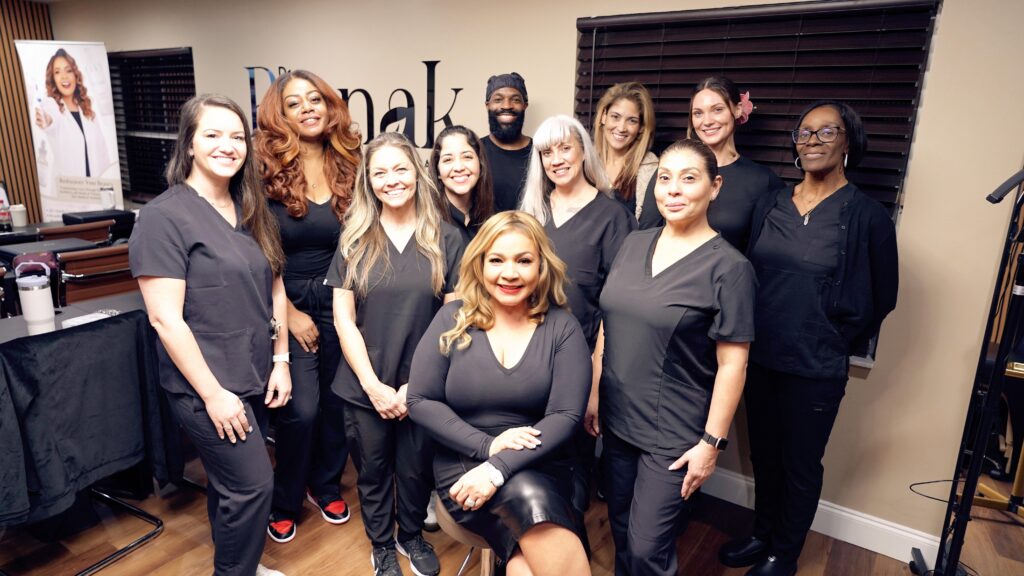
If you are ready to explore a career in paramedical tattooing, the next step is a conversation. Whether you are a complete beginner, a cosmetologist, an aesthetician, a nurse, or an existing PMU artist looking to expand into clinical work, Dr. Rusnak Academy offers a clear pathway from certification to client-ready practice.
Schedule a call with our training team to learn about upcoming class dates, available locations, financing options, and what to expect during your 3-day certification experience.
ABOUT THE AUTHOR
Dr. Cecilia Rusnak PhD, LME, DAc is the founder of Healing Skin Medical Aesthetics and Dr. Rusnak Academy. With 32 years of clinical experience in integrative medicine and paramedical aesthetics, Dr. Rusnak has trained practitioners nationwide in advanced scar camouflage, stretch mark revision, 3D areola tattooing, and inkless skin restoration techniques.
DISCLAIMER
Income figures cited in this article are based on publicly available data from ZipRecruiter and Glassdoor as of 2026 and represent averages. Individual earnings vary based on location, experience, clientele, and business model. This article is for educational purposes only.
Ready to Build a Career in Paramedical Tattooing?
Dr. Cecilia Rusnak Academy offers a nationally recognized Paramedical Tattoo Certification — led by Dr. Cecilia Rusnak PhD, LME, DAc, with 32 years of clinical experience. Classes run in Orlando, New York, Houston, and Las Vegas.
Schedule a Call to Learn More and Reserve Your Seat
Earn Your Credential at Dr. Rusnak Academy
Dr. Rusnak Academy issues its own private certification in paramedical tattooing. It is not a government or state licensing body.. Four formal training tracks — Paramedical Tattoo Certification, 3D Areola Masterclass, Powder Botox Masterclass, and Mastering Paramedical Billing — taught and examined by Dr. Cecilia Rusnak PhD, LME, DAc.